
Internship Spotlight: Research Associate
Spread the Knowledge. Share: 


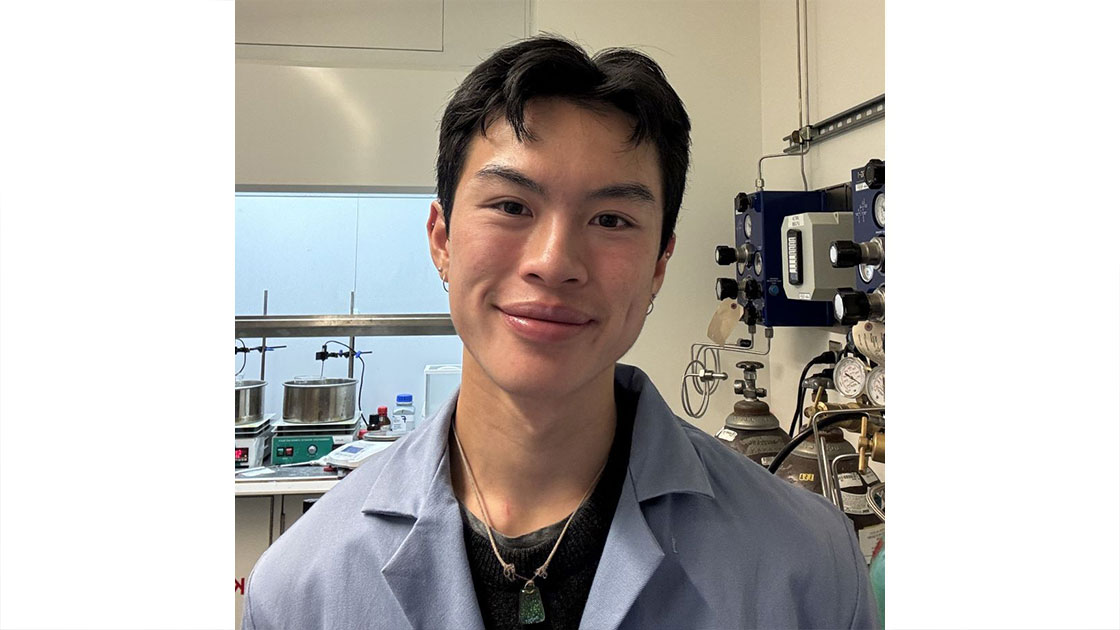
What's it like working at a renewable energy startup? Marcus, a chemistry and materials science major at UCLA, fills us in.
Where was your internship?
I was a research associate at RenewCO2, a carbon-capture and renewable energy startup in Somerset, New Jersey. RenewCO2 creates fuels and industrial chemicals from carbon dioxide. It was a paid, 12-week, summer internship.
What did you do?
The internship involved material testing, electrochemical system design and data comparison and analysis. My work largely focused on product purification – separating specific compounds from a bulk solution of different chemicals – and increasing the reliability of the purification technique used in the company’s technology. I identified common failures and developed solutions from both a design and user perspective.
How did you get this internship? What was the hiring process like?
I found this internship through ClimateTech List which is a job board dedicated to jobs within the climate tech industry. My minor is in environmental systems and society, so I wanted an internship in the environmental field. My application consisted of my resume, cover letter, a letter of recommendation, and a short-answer question. In addition to an interview, I did a presentation on my previous research.
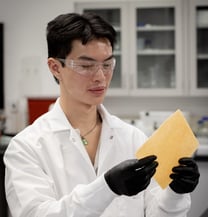
Marcus inspects a resin wafer, part of the chemical separation system he helped develop and test.
What did you learn?
-
I learned a lot about startups, the climate tech industry, and a completely new area of science. This internship exposed me to research that is more closely related to chemical engineering than chemistry and taught me a lot about experimental design and operation. Instead of thinking about different molecules and chemical reactions, I had to consider what kind of pumps we should use for different solutions and how various parts of the system should be assembled. It was super cool to perform research from this perspective since the majority of my background is in molecular-level science.
-
I also learned a lot about what kind of work I enjoy and what motivates me. For example, I realized that I don’t mind repetition, but I have to feel purpose in repeating a task. I also learned that I am very motivated by deadlines or milestones. These are things I have always been aware of but seeing them prevail in a new environment solidified them as my core values.
-
This is my first time working a full-time job, and the experience made me realize how tiring working is and how much effort it takes to have income. Working part time while in school seems like less of a commitment and less demanding than working 40 hours per week.
What were the highlights of this summer internship?
-
Moving across the country and living somewhere where I don’t know anyone gave me the chance to explore the East Coast, grow personally, and reflect on what I want in life.
-
The connections I made both within and outside of the company. RenewCO2 is a small company of about ten employees, and so I interacted with everyone – including the C-suite executives. My coworkers were huge resources for discussing my academic and career goals since they’ve all experienced grad school and industry. They also introduced me to other professionals in the field such as founders of other startups and scientists at national labs.
How did this internship affect you financially?
The internship was paid, but I found myself spending more money than I typically would because of all the weekend trips I took. I realized how expensive eating out and housing are and how much money it takes to travel. I also had to pay for my housing and travel to the east coast. Despite this, I was able to save some money for future emergencies.
How did this chemistry internship affect your college or career goals?
I’ve always been interested in using science for environmental applications, but this experience narrowed down my interests to a specific field within climate tech. I am now open to pursuing a PhD in a field other than chemistry (such as chemical engineering). I entered college thinking I wanted to go into the business side of sustainability, but I realized that I love research. Joining a research lab like this has further developed my passion for performing wet lab experiments (using physical samples, liquids and chemicals) and inspired me to pursue a career in research and development.
What advice can you offer about how to get an internship?
-
Don’t focus too much on meeting all qualifications of the job. You don’t have to meet every qualification to be a good candidate. I personally did not have any experience in separations or electrochemistry, but I was able to describe how my research and academic background made me a qualified applicant. Often, companies are looking for interns who are willing to learn and adapt rather than interns who can offer specific expertise.
-
Know the specific industry you want to work in and how your background fits into the position. This will narrow down your options, save you time and make your application more genuine. Being focused may enable you to use one resume and one cover letter for each application instead of having to rewrite them for each internship.
-
Define your interests and goals before you start applying. Then convey your passion in your cover letter with specific details and anecdotes.
How does CollegeData help students on the road to and through college?
With the Road to College Student Stories and Stories from College, CollegeData shows students that there are many different paths to success and no “correct” college experience. I think that these stories show younger students the different possibilities of what college can do for them and how they can reach their goals in college.
Read More:
- Read About Marcus's Path to UCLA
- UCLA's College Profile