
10 FAFSA® Facts Every College-Bound Student Should Know
Spread the Knowledge. Share: 


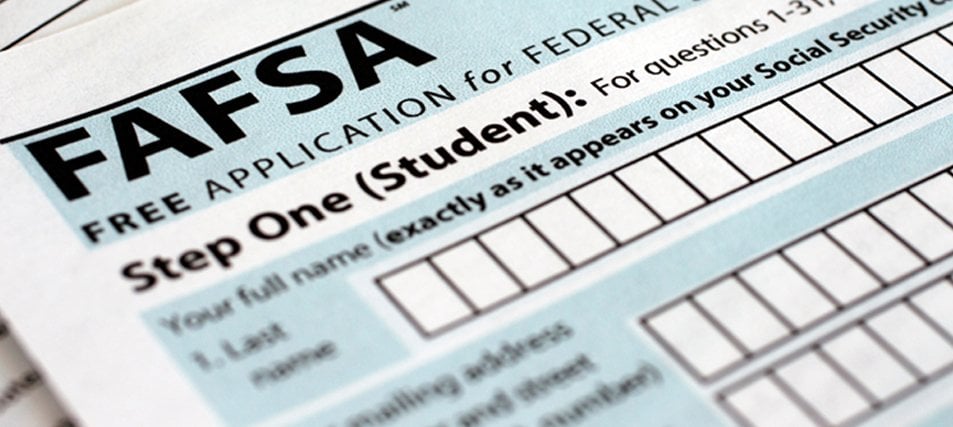
To get financial aid, you need to apply for it. Your first step is getting to know the Free Application for Federal Student Aid (FAFSA).
Note: The information contained in this article is current as of March 16, 2026 and will be updated, as necessary, to reflect any significant legislative or regulatory changes to federal student loans.
1. FAFSA STANDS FOR FREE APPLICATION FOR FEDERAL STUDENT AID
The FAFSA is the primary free application form for need-based financial aid from the federal government. Colleges use the information from your FAFSA to determine your eligibility for federally funded scholarships, grants and loans. Colleges may also use information from your FAFSA to award private scholarships from their own funds, and your state may require the FAFSA to determine state-funded college aid.
2. You should file a FAFSA even if you think you won’t qualify for financial aid
There are several reasons why some students and their families don’t complete the FAFSA. It could be because they think their income is too high to qualify for financial aid or that the process is just too complicated. But anyone who fills out the FAFSA will at least qualify for a federally insured, direct student loan and perhaps other grants, scholarships, work-study or loans. Some scholarships that are not based on financial need (such as merit scholarships) also require a FAFSA.
3. The FAFSA asks for information about students and parents
Anyone who is required to report information on your FAFSA is considered a “contributor.” Contributors must report information about their income and assets. In addition to the student, a contributor may be a student’s biological or adoptive parents, a stepparent, or a student’s spouse. Who your contributors are will depend on your dependency status (whether you are an independent or dependent student), your age and marital status, as well as the marital and tax filing status of your parents and spouse, if applicable.
For example, let’s say you are a dependent student and your parents are married and filed a joint income tax return. In this case, just one parent will need to contribute to your FAFSA. However, if your parents are unmarried but living together, both will be required to contribute.
4. Your FAFSA won’t tell you how much financial aid you’ll receive
Technically, the information from your FAFSA only determines your Student Aid Index (SAI), which is a number that colleges use to determine a student’s financial aid eligibility. The SAI is not an exact dollar amount that students and their families will be expected or required to pay for college. After submitting a completed FAFSA, you will receive a FAFSA Submission Summary containing your official SAI calculation and your eligibility to receive a Federal Pell Grant. A higher SAI usually results in lower amounts of federal financial aid.
5. Complete and submit your FAFSA as soon as possible
The FAFSA is usually released to the public every October 1. Be sure to complete and submit your application before the FAFSA deadline set by the colleges you plan to apply to and by the deadline set by your state of residence. Filing the FAFSA as soon as possible after it is released can be to your advantage, as many colleges distribute financial aid on a first-come, first-served basis. To find FAFSA deadlines for your state, visit the Department of Education’s student aid deadlines page.
6. All contributors need an FSA ID and must provide consent
To access and complete the FAFSA, all contributors must create a StudentAid.gov account and FSA ID and provide their consent to having their federal tax information transferred directly from the Internal Revenue Service (IRS) into the FAFSA form. All contributors must provide this consent even if they do not have a social security number, did not file taxes, or filed taxes in another country. If a student or contributors don’t provide consent, the student will not be eligible for any federal aid other than a direct unsubsidized loan.
7. You can select up to 20 colleges to receive your FAFSA and Student Aid Report
You can list up to 20 schools on the online FAFSA form and up to 10 schools on the paper version of the FAFSA. Regardless of whether you complete and submit your FAFSA online or on paper, you must list at least one school on the form. You can always add schools to your FAFSA after you submit it and remove previously-added schools.
The colleges you list on your FAFSA will receive your FAFSA Submission Summary a few days after you submit your form, but they won’t see the other colleges you select to receive this information.
8. FAFSA help is available
Don’t be hesitant to ask for help in completing the FASFA if you need it. There are various resources available to help you, including your high school guidance counselor, the financial aid office of a school you are applying to, and the FAFSA website. Also, various events to help you complete the FAFSA are hosted throughout the country (sometimes called “College Goal Sundays” or “Cash for College”).
9. You may make SOME changes to YOUR FAFSA after you Submit it
Most of the information you provide on the FAFSA cannot be updated once you submit it, although you can correct your Social Security number and add or remove colleges from the form by going to the FAFSA website and logging into your account. It’s also a good idea to contact the financial aid offices of the colleges to which you are applying, as they may be able to correct your form.
If your family’s circumstances change significantly after you submit your FAFSA, such as one or both of your parents or guardians lose their job or unemployment benefits, you cannot adjust the FAFSA form directly. But you can contact the financial aid office of each of the colleges you selected to receive your FAFSA information and explain the change in circumstance. The college may ask you to submit a letter detailing the changes along with a copy of supporting documentation.
For more information about how to report errors, changes in family income, and other updates, visit StudentAid.gov.
10. You might be selected for FAFSA verification
Sometimes, colleges will ask you to provide documentation or other verification for the information you reported on the FAFSA. This is called being selected for “verification.” If this happens, it doesn’t mean you did anything wrong – some schools verify all students’ forms and others are selected at random. Be sure to save the records and materials you used to complete the FAFSA in case this happens. And lastly, be sure to save a copy of your completed FAFSA for your records before you submit it.
Want to get a head start on completing the FAFSA? See 5 Ways to Prepare for the FAFSA.
SOURCE: U.S. Department of Education, Federal Student Aid office